Types of Honey
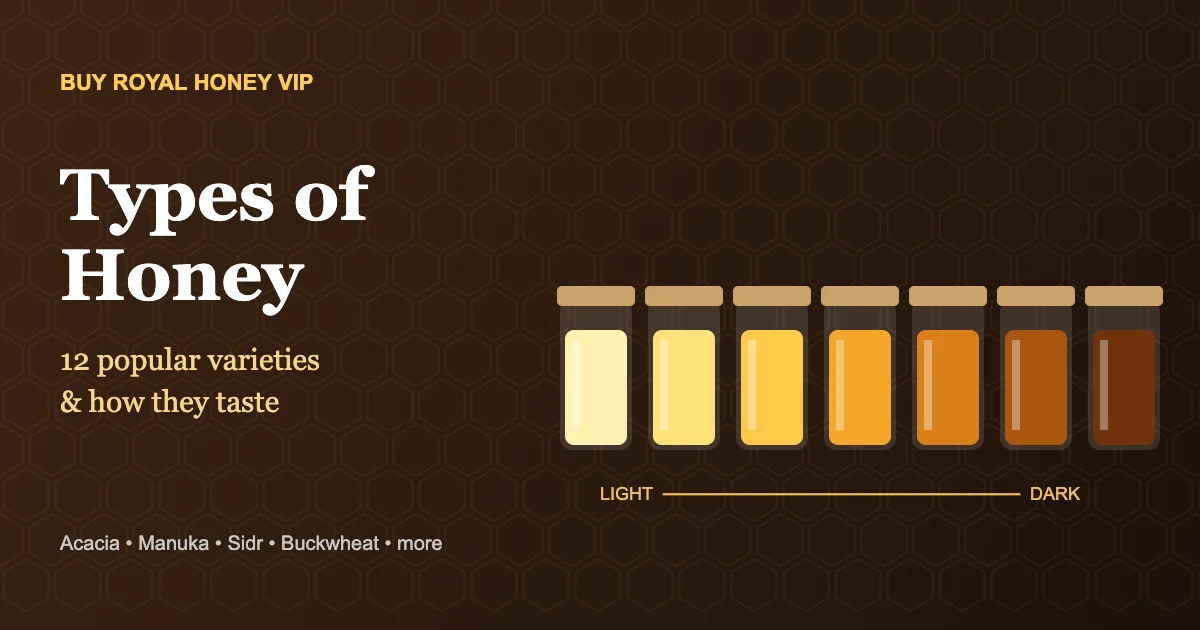
Types of Honey: 12 Popular Varieties and How They Taste
Nov
There are hundreds of types of honey around the world, and each one tastes different. The flavour, colour and texture depend mainly on which flowers or trees the bees visited. In this guide we explain how honey types are named, then walk through 12 popular varieties so you can find the one you love.
How are honey types named?
- Monofloral honey comes mostly from one plant, such as acacia, Manuka or Sidr. It has a distinct, predictable flavour.
- Polyfloral (wildflower) honey comes from many different flowers. Its taste changes with the season and region.
- Honeydew honey is made from sweet secretions left on trees (such as pine or fir) by sap-sucking insects, rather than from flower nectar. It is usually dark and less sweet.
Honey can also be described by how it is processed — raw or regular, liquid, creamed, or still in the honeycomb.
12 popular types of honey
1. Acacia honey
Very light, clear and mild, with a delicate floral sweetness. Acacia honey stays liquid for a long time because it is high in fructose. Great for tea and for people who prefer a gentle taste. Read our full acacia honey guide.
2. Manuka honey
From the Manuka bush of New Zealand. Thick, dark cream to brown, with an earthy, slightly bitter, herbal flavour. It is graded by systems such as UMF and MGO — see Manuka honey grades explained.
3. Sidr honey
Made from the flowers of the Sidr (jujube) tree in Yemen, Pakistan, Saudi Arabia and nearby regions. Rich, buttery and caramel-like, and one of the most prized honeys in the Middle East. Learn more in What is Sidr honey?
4. Clover honey
One of the most common honeys in supermarkets. Light amber with a clean, sweet, familiar taste — an easy everyday honey for toast and baking.
5. Wildflower honey
A polyfloral honey from whatever is blooming nearby. Every batch is a little different: it can be light and fruity in spring or darker and fuller in late summer.
6. Buckwheat honey
Very dark, almost like molasses, with a strong, malty taste. Darker honeys like buckwheat tend to contain more antioxidants than light ones.
7. Orange blossom honey
Light and fragrant with a fresh citrus aroma. Lovely in desserts, yoghurt and fruit salads.
8. Eucalyptus honey
Medium to dark amber with a slightly medicinal, menthol-like note. Popular in warm drinks.
9. Lavender honey
Pale and delicately floral, often produced in Provence and Spain. A gourmet choice for cheese boards and pastries.
10. Chestnut honey
Dark, strong and pleasantly bitter, common in Italy and France. Pairs well with aged cheeses.
11. Thyme honey
Famous in Greece. Golden, aromatic and herbal, with a bold taste that stands out in Greek yoghurt.
12. Pine (honeydew) honey
A honeydew honey, mainly from Turkey and Greece. Dark, less sweet and woody, and slow to crystallise.
Bonus: black seed honey is usually honey from bees visiting Nigella sativa flowers, or honey blended with black seed. Read our black seed honey guide. You may also see royal jelly mixed into honey — that’s a different bee product altogether.
Quick comparison
| Honey | Colour | Flavour | Best for |
|---|---|---|---|
| Acacia | Very light | Mild, floral | Tea, kids, sweetening |
| Clover | Light amber | Classic sweet | Toast, baking |
| Orange blossom | Light | Citrus, fragrant | Desserts, yoghurt |
| Lavender | Pale | Delicate floral | Cheese, pastries |
| Wildflower | Varies | Changes by season | Everyday use |
| Thyme | Golden | Herbal, bold | Greek yoghurt |
| Eucalyptus | Medium amber | Menthol notes | Warm drinks |
| Sidr | Amber to dark | Buttery, caramel | Eating by the spoon |
| Manuka | Dark cream/brown | Earthy, herbal | By the spoon |
| Chestnut | Dark | Bitter, strong | Aged cheese |
| Pine | Dark | Woody, less sweet | Breakfast, bread |
| Buckwheat | Very dark | Malty, molasses | Marinades, baking |
How to choose the right honey
- For tea and coffee: a mild honey such as acacia or clover. See our best honey for tea guide.
- For a special gift or treat: premium monofloral honeys like Sidr or Manuka.
- For baking and marinades: darker honeys such as buckwheat or chestnut, whose flavour survives cooking.
- For the purest experience: raw honey or honeycomb.
Whatever you choose, buy from a trusted seller — here’s how to tell real honey from fake — and store it properly. If it crystallises, that’s natural and not a sign of spoilage. And remember that every type of honey is still mostly sugar, so enjoy it in moderation (see Is honey good for you?). Never give honey to babies under 12 months.
Explore our honey
Want to taste the difference between varieties? Browse our natural honey collection, including Sidr honey and Manuka honey. Delivery details are on our shipping & returns page, and common questions are answered in the FAQ.
Read more: What Is Sidr Honey? · Acacia Honey Guide · Manuka Honey Grades Explained
