Uncategorized
Lavender Honey: Taste, Uses and Where It Comes From
Nov
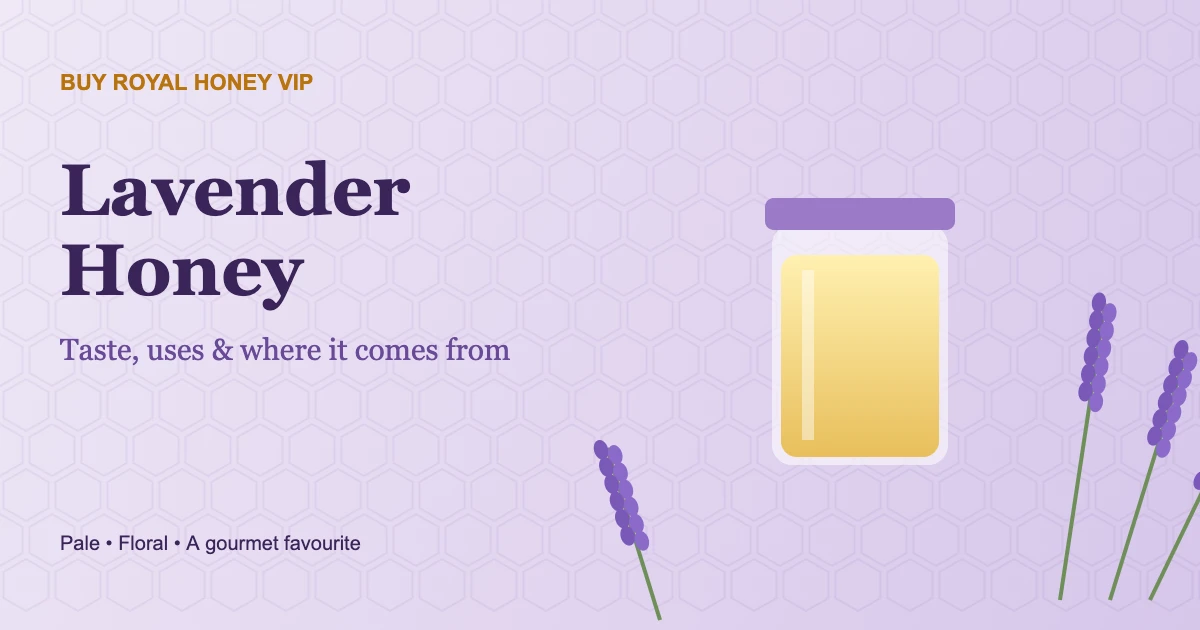
Pale, fragrant and delicate, lavender honey is one of the most elegant honeys in the world. It’s especially famous in Provence, in the south of France, where bees forage across purple lavender fields in summer. Here’s what lavender honey is, how it tastes, how it differs from “lavender-infused” honey, and the best ways to enjoy it.
What is lavender honey?
True lavender honey is made by bees from the nectar of lavender flowers. It’s a monofloral honey, mainly produced in regions with large lavender fields — most famously Provence in France (where it’s called miel de lavande), as well as parts of Spain and other Mediterranean and Eastern European countries.
Lavender flowers for only a few weeks each summer, so genuine lavender honey is produced in limited quantities. Compare it with other varieties in our types of honey guide.
Lavender honey vs lavender-infused honey
It’s worth knowing the difference before you buy:
- Lavender honey — bees made the honey from lavender nectar. The floral notes come naturally from the flowers.
- Lavender-infused honey — an ordinary honey with dried lavender flowers (or flavouring) added afterwards. It can be tasty, but it’s a different product, and the label should say “infused” or “flavoured”.
What does lavender honey taste like?
| Feature | Lavender honey |
|---|---|
| Colour | Very pale gold; turns creamy white when crystallised |
| Flavour | Delicate, sweet and floral, with a light herbal note |
| Aroma | Fresh and fragrant — subtle rather than “soapy” |
| Texture | Smooth; often crystallises into a fine, creamy texture |
| Character | Elegant and gentle — a gourmet favourite |
Good lavender honey shouldn’t taste like perfume. Its lavender character is gentle and natural. If a honey tastes strongly of lavender soap, it may be flavoured rather than true lavender honey.
How it compares with other light honeys
- vs acacia: both are pale and mild; acacia stays liquid longer and is more neutral, while lavender is more fragrant.
- vs orange blossom: orange blossom is fruitier and more citrusy; lavender is more herbal and floral.
- vs clover: clover is a classic everyday honey; lavender is more delicate and special.
How to use lavender honey
- With cheese: wonderful with fresh goat’s cheese, ricotta, brie and other soft cheeses.
- In tea: lovely in green, white, chamomile or Earl Grey tea — see the best honey for tea.
- Desserts: drizzle over panna cotta, ice cream, crème brûlée or fresh berries.
- Baking: great in shortbread, madeleines and our honey cake.
- Breakfast: on toast, Greek yoghurt or honey granola.
- Spreads: because it crystallises finely, it’s ideal for creamed honey or honey butter.
Is lavender honey healthy?
Lavender honey has the same basic make-up as other honeys: mostly natural sugars with tiny amounts of enzymes, minerals and plant compounds. Lighter honeys generally contain fewer antioxidants than darker honeys like buckwheat. Despite claims you may see online, there’s no good evidence that lavender honey helps with sleep or anxiety — enjoy it for its flavour, in moderation. See Is honey good for you?
How to choose and store it
- Look for “lavender honey” (not “lavender-flavoured”) and a clear country or region of origin.
- Choose genuine, pure honey — here’s how to spot real vs fake honey.
- Store it sealed at room temperature. If it crystallises, that’s normal — warm gently if you prefer it runny. See how to store honey.
- Its beautiful colour and story make it a lovely present — see our honey gift ideas.
Good to know
- Never give honey to babies under 12 months — read when can babies have honey?
- Avoid it if you’re allergic to bee products or pollen.
- Don’t confuse lavender honey with lavender essential oil, which is not a food.
Explore premium honeys in our natural honey collection, including Sidr honey and Manuka honey. See our shipping & returns page and FAQ for order details.
Read more: Orange Blossom Honey · Acacia Honey Guide · Types of Honey
