Uncategorized
Honey vs Sugar: Which Is Healthier? An Honest Comparison
Nov
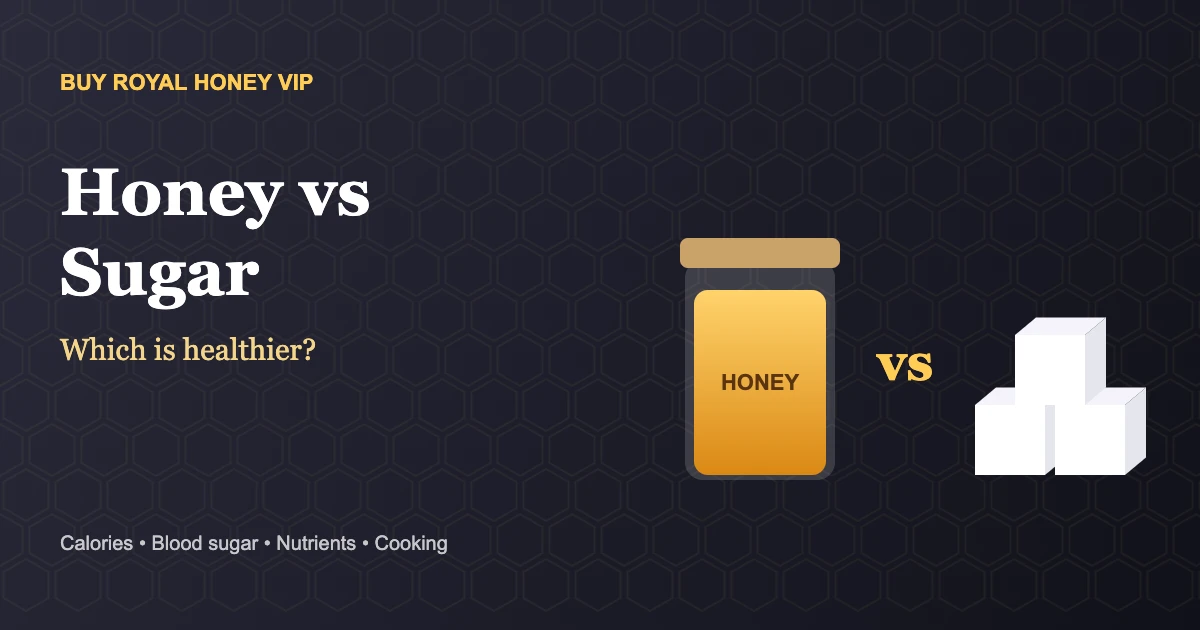
Honey vs sugar — which is healthier? Honey is often called the “natural” choice, while white sugar gets a bad reputation. The truth is more balanced: honey does have a few small advantages, but your body treats both as sugar. Here’s an honest, side-by-side comparison.
Quick comparison
| Honey | White sugar | |
|---|---|---|
| What it is | Natural sweetener made by bees from flower nectar | Refined from sugar cane or sugar beet |
| Main sugars | Fructose and glucose (separate) | Sucrose (glucose + fructose joined) |
| Calories per teaspoon | about 21 kcal (7 g) | about 16 kcal (4 g) |
| Calories per tablespoon | about 64 kcal | about 48 kcal |
| Sweetness | Sweeter — you can use a bit less | Standard |
| Glycemic index (GI) | roughly 45–64, depends on the honey | about 65 |
| Extra nutrients | Tiny amounts of antioxidants, enzymes, minerals | None |
| Flavour | Floral to rich — hundreds of varieties | Plain sweetness |
| Babies under 12 months | Never | Avoid added sugar |
Figures are approximate and vary by product.
Where honey has the edge
- Flavour: honey brings taste, not just sweetness — from mild acacia to rich Sidr and bold buckwheat. A little goes a long way.
- Sweeter per spoon: because honey tastes sweeter, many people use less of it.
- Small extras: honey contains trace antioxidants and enzymes (more in darker and raw honey) that white sugar lacks — though the amounts are small.
- Cough relief: honey can soothe coughs — a Cochrane review found it probably helps children over 1 year old. Sugar doesn’t have this benefit.
- Less processed: raw honey is minimally processed — see raw vs regular honey.
Where they are the same
- Both are “free sugars” — the World Health Organization recommends limiting all free sugars, including honey, to under 10% of daily calories.
- Both raise blood sugar. Honey’s slightly lower GI makes only a small difference in practice — read can diabetics eat honey?
- Both can harm teeth if eaten often without brushing.
- Both add calories — honey actually has more per spoon because it’s denser.
So which is healthier?
If you’re choosing between a teaspoon of honey and a teaspoon of sugar, honey is a slightly better choice — more flavour, tiny extra nutrients, and you may use less. But the bigger health win is simply eating less added sweetener overall. Swapping sugar for honey won’t make a high-sugar diet healthy.
For a sensible daily amount, see how much honey per day, and for the full science read Is honey good for you?
Cooking and baking: honey vs sugar
- Honey is liquid and sweeter, so recipes need adjusting — use about ¾ cup honey for each cup of sugar and reduce other liquids. Full guide: how to substitute honey for sugar.
- Honey browns faster — lower the oven slightly.
- Honey keeps cakes moist, like our honey cake.
- Sugar is still better for meringues, crisp cookies and candy-making.
What about other sweeteners?
Maple syrup, agave and date syrup are also “free sugars”. See how honey compares in honey vs maple syrup, and if you avoid animal products, read is honey vegan?
Tips for using less sugar overall
- Swap, don’t add — use honey instead of sugar, not as well as it.
- Measure your honey rather than pouring from the jar.
- Use stronger-flavoured honey so you need less.
- Add natural sweetness with fruit, cinnamon or vanilla — see honey and cinnamon.
- Read labels — many “honey” cereals and snacks contain lots of added sugar too.
Good to know
- Never give honey to babies under 12 months — read when can babies have honey?
- Choose genuine honey — some cheap honey is mixed with sugar syrups. Here’s how to spot real vs fake honey.
This article is general information, not medical advice.
Sources: World Health Organization, “Guideline: Sugars intake for adults and children” (2015); Oduwole O. et al., “Honey for acute cough in children”, Cochrane Database of Systematic Reviews, 2018.
Choose a honey worth savouring from our natural honey collection, including Sidr honey and Manuka honey. See our shipping & returns page and FAQ for order details.
Read more: Is Honey Good for You? · How Much Honey Per Day? · Honey vs Maple Syrup
