Uncategorized
Honey vs Maple Syrup: Which Is Better?
Nov
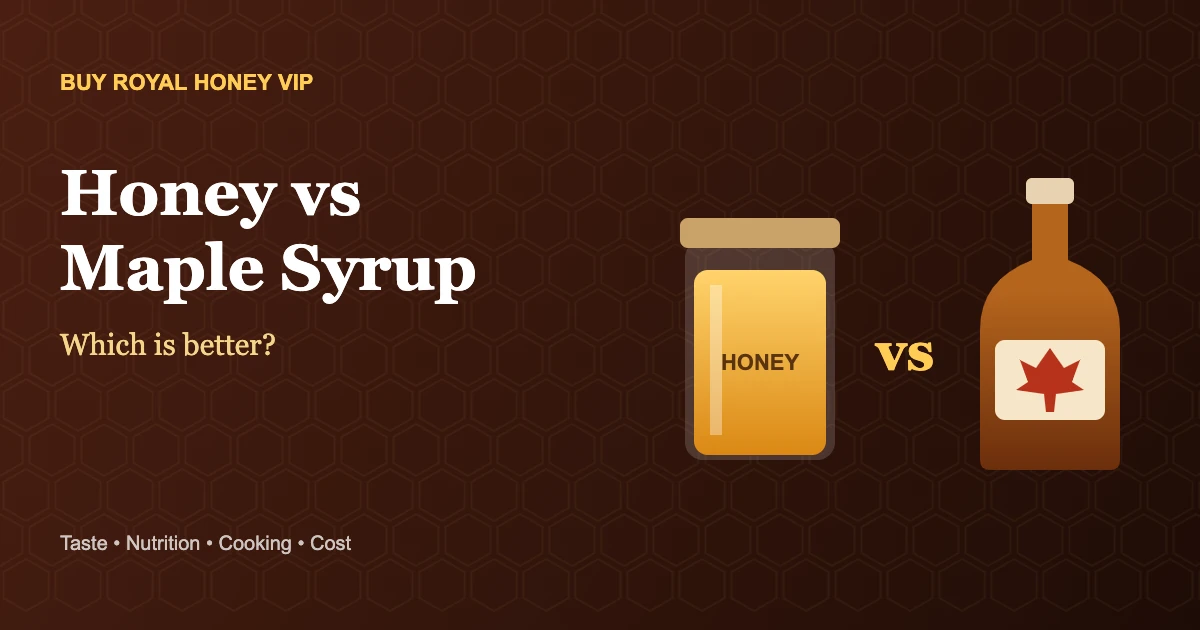
Honey vs maple syrup — both are natural, golden sweeteners, and both are popular swaps for white sugar. But they come from very different places, taste different, and behave differently in the kitchen. Here’s a simple side-by-side comparison so you can choose the right one for your plate.
Where they come from
- Honey is made by bees from flower nectar. The bees store it in honeycomb, where it slowly thickens. Its flavour depends on the flowers — from mild acacia to rich Sidr.
- Maple syrup comes from the sap of maple trees, mostly in Canada and the north-eastern United States. The thin, watery sap is boiled down until it becomes a syrup.
Quick comparison
| Honey | Maple syrup | |
|---|---|---|
| Source | Bees, from flower nectar | Maple tree sap |
| Energy (1 tbsp) | about 64 kcal | about 52 kcal |
| Main sugars | Fructose and glucose | Mostly sucrose |
| Texture | Thick, can crystallise | Thin and pourable |
| Flavour | Floral to rich; varies by flower | Caramel, woody, toasty |
| Sweetness | Sweeter than sugar | A little less sweet than honey |
| Notable nutrients | Traces of antioxidants and enzymes (more in raw, dark honey) | Manganese and some zinc |
| Vegan? | No | Yes |
| Babies under 1 year | Never | Not toxic, but avoid added sugars |
Figures are approximate and vary by product.
Taste and texture
Honey has a huge flavour range — there are hundreds of varieties (see our guide to the types of honey). It’s thicker and clings to spoons and toast. Maple syrup has a more uniform caramel-and-wood flavour and is runnier, which is why it soaks so nicely into pancakes and waffles.
Nutrition: is one healthier?
Honestly, the differences are small. Per tablespoon, maple syrup has slightly fewer calories and slightly less sugar, while honey is sweeter, so you may use a little less of it. Maple syrup provides useful amounts of manganese; honey — especially raw and darker varieties — contains small amounts of antioxidants and enzymes.
Both count as “free sugars”, which the World Health Organization recommends keeping to less than 10% of daily calories. So whichever you choose, use it in moderation. For more detail, read Is honey good for you?
One real difference: honey has some research supporting its use as a home remedy to soothe children’s coughs (for kids over 1 year), while maple syrup does not.
Cooking and baking
Choose honey for:
- Tea and warm drinks — see the best honey for tea.
- Salad dressings and marinades, where its thickness helps them cling.
- Yoghurt, cheese boards, toast and creamed honey spreads.
- Moist cakes and breads — here’s how to substitute honey for sugar.
Choose maple syrup for:
- Pancakes, waffles and French toast.
- Roasted vegetables and glazes.
- Vegan baking.
- Recipes where you want a caramel or toasty note.
You can usually swap one for the other 1:1 in drizzles and dressings. In baking, honey browns faster and adds more moisture, so lower the oven temperature slightly when using it.
Watch out for fakes
Both products are sometimes imitated. “Pancake syrup” or “breakfast syrup” is often just flavoured corn syrup — check the label says 100% pure maple syrup. Honey can be diluted with cheap syrups too; learn how to tell real honey from fake, and why many people prefer raw honey.
So which is better?
- Pick honey if you want variety of flavour, a thicker texture, raw unprocessed options, or a natural cough soother for kids over 1.
- Pick maple syrup if you follow a vegan diet, want a slightly lower-calorie topping, or love that classic pancake taste.
- Or keep both — many kitchens do!
Whatever you choose, enjoy it in moderation, and never give honey to babies under 12 months.
Discover our honey
Browse our natural honey collection, including Sidr honey and Manuka honey. See our shipping & returns page and FAQ for order details.
Read more: Is Honey Vegan? · Types of Honey · Substitute Honey for Sugar
